
Performance Data Shows the Problem but Rarely Explains It
Orgesa Berisha
Category
Podcasts
Date
A customer service team learns a new policy. Two weeks later, quality scores fall and more customers call back about the same issue. The dashboard confirms that something has changed. It does not explain whether employees misunderstood the policy, struggled to explain it or found that the process was difficult to follow.
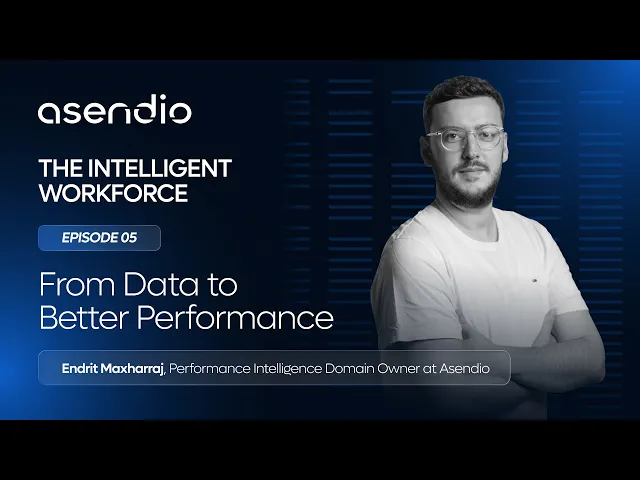
This gap sits at the centre of the conversation with Endrit Maxharraj, Performance Intelligence Domain Owner at Asendio. His point is straightforward: a result tells a manager where to look, but it rarely provides enough information to choose the right response.
The score tells us what happened. It does not always tell us why - Endrit Maxharraj
The same score can hide two different problems
Imagine two employees with the same low quality score. The first does not understand part of the policy. The second understands it but has difficulty explaining it when a customer is impatient or confused.
If both employees are sent back to the same course, one may benefit while the other repeats information they already know. The organization has responded to the number, not the reason behind it.
Managers need context before they choose an intervention. They need to know what changed, where the problem appears, whether it affects one person or a wider group and what the employee was expected to do in that situation.
Look for the pattern before blaming the person
One employee struggling with a policy may need focused support. Twenty employees struggling with the same paragraph may point to unclear guidance, an outdated knowledge source or a process that works differently in practice than it does on paper.
The distinction matters because performance data can easily be treated as a judgement about the employee. Sometimes the problem belongs to the way the work has been designed.
Endrit discusses this difference in his explanation of individual and team patterns. A low score is a reason to investigate. It is not a diagnosis on its own.
Choose support that matches the cause
Once the cause is clearer, the next step becomes more specific.
A knowledge gap may require a short update or a clearer explanation of the policy.
Difficulty applying the policy may require realistic practice with the situations causing trouble.
A communication problem may be better addressed through coaching and feedback.
A repeated issue across the team may require a change to the process or the source material.
This does not remove the manager from the decision. It gives the manager a better starting point. Experience still matters, especially when the available data does not capture the full situation.
Check the work after the support
A coaching session is not proof that the problem has been solved. The organization must look at what happens next.
If coaching focused on explaining a policy, are employees now explaining it more clearly? Has quality improved? Are fewer customers calling back?
If the result does not change, the original diagnosis may have been wrong. The employee may need a different form of support, or the real problem may sit in the process rather than the employee.
This is where performance information becomes useful for development. Live work shows where support may be needed. The intervention addresses a specific cause. Later performance shows whether the intervention helped.
Where Asendio fits
Asendio connects approved organizational knowledge, employee practice, readiness evidence and performance information. The purpose is to help managers see the relationship between what an employee learned, what happened during work and what support may be relevant next.
The platform does not decide why performance changed on the manager's behalf. It brings the relevant evidence closer together so the decision does not depend on searching through several reports and spreadsheets.


